Behavioral Patterns in Live Table Games: Session Log Analysis for Roulette and Blackjack
Ulrich Albrecht · Jun 24, 2026
Behavioral Patterns in Live Table Games: Session Log Analysis for Roulette and Blackjack
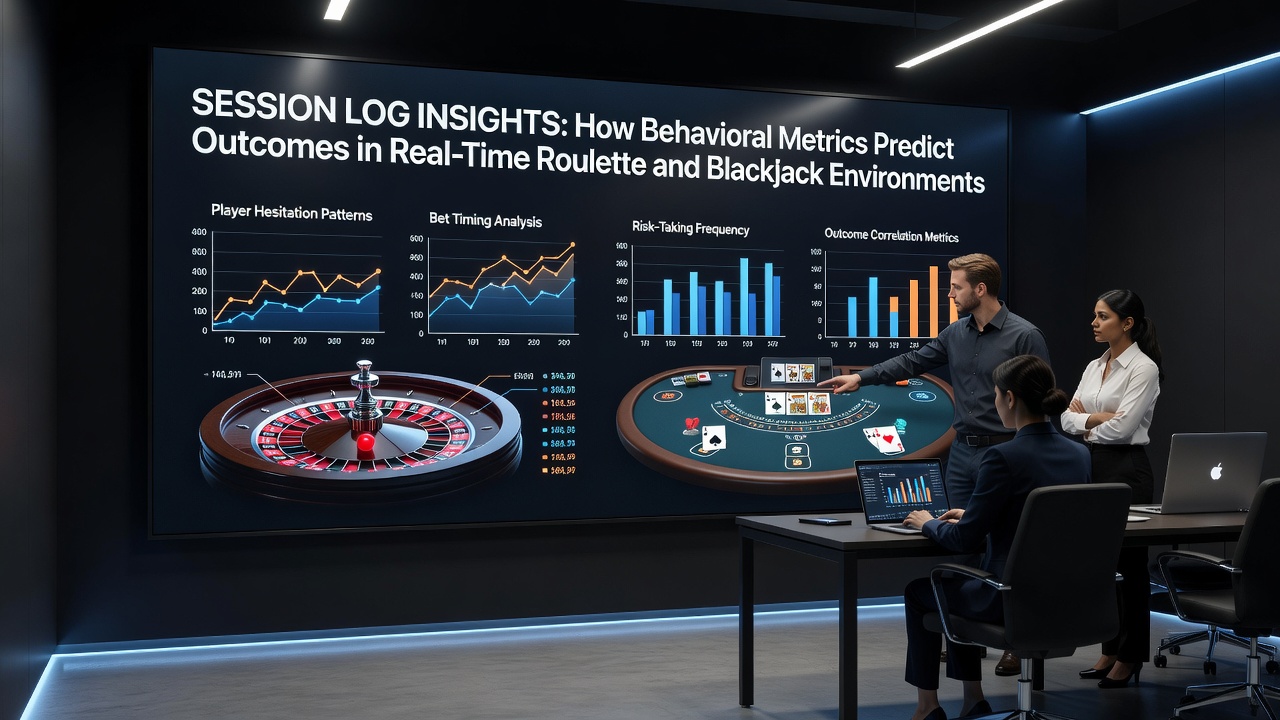
Session logs in real-time roulette and blackjack environments capture detailed player interactions including bet timing, wager adjustments, and decision sequences. These records provide raw data that researchers and operators examine to identify correlations between specific behavioral metrics and game outcomes. Data collected through June 2026 shows consistent patterns across multiple casino platforms where rapid bet placement in roulette often aligns with shorter session durations and higher variance in results.
Blackjack logs reveal additional layers because player choices such as hitting, standing, or doubling down occur at measurable intervals. Analysts track metrics like average decision time per hand alongside bet size fluctuations to map how these elements connect to win rates. Studies from institutions like the University of Nevada, Las Vegas indicate that players who extend decision times beyond eight seconds per hand demonstrate lower average returns when facing dealer upcards of ten or ace.
Key Metrics Captured in Session Logs
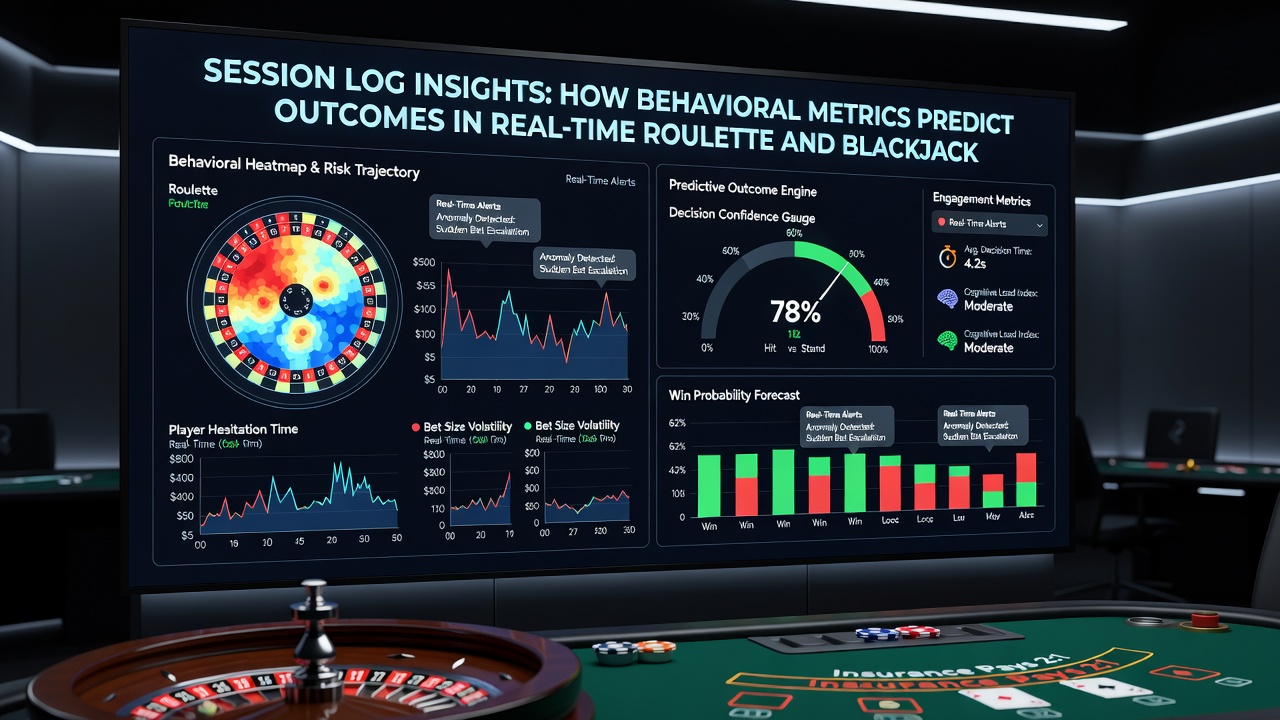
Operators record several core variables during live sessions. Bet frequency measures how many wagers a player places within defined time blocks, while stake progression tracks increases or decreases after wins and losses. Response latency records the gap between card reveals and player actions in blackjack or wheel spins in roulette. Heat maps generated from these logs highlight table positions and time-of-day clusters where certain behaviors concentrate.
Additional fields include chip denomination switches and pause durations between rounds. These elements combine into composite scores that operators feed into predictive models. Figures from the Nevada Gaming Control Board demonstrate that sessions exceeding forty-five minutes with consistent stake escalation show a measurable shift toward negative expected value when players maintain the same decision speed throughout.
Patterns Linking Behavior to Outcomes
Researchers have mapped several recurring sequences. In roulette, players who reduce bet sizes immediately after three consecutive losses tend to exit sessions earlier with smaller overall deficits compared to those who maintain or increase stakes. Blackjack data reveals that hands played at sub-three-second decision speeds correlate with elevated bust rates on stiff totals between twelve and sixteen.
One study published by the National Center for Responsible Gaming examined over two million logged hands and found that players exhibiting clustered rapid bets followed by extended pauses achieved different outcome distributions than those maintaining steady pacing. The analysis controlled for game rules and house edge variables yet still detected statistically significant divergences in session net results.
Implementation Across Casino Operations
Live dealer platforms integrate session logging directly into game servers so that every action timestamp and wager amount becomes part of a searchable database. Floor supervisors at land-based properties use handheld devices to supplement electronic records with observational notes on player posture and social interactions. These combined datasets feed algorithms that flag sessions deviating from established behavioral baselines.
European regulators outside the United Kingdom have begun requiring operators to retain session logs for minimum periods to support compliance audits. The approach allows retrospective review of whether behavioral indicators preceded significant player losses or extended play periods. Canadian provincial gaming authorities have similarly incorporated log analysis into responsible gambling frameworks that trigger automated session reviews after predefined thresholds.
Research Findings on Predictive Accuracy
Academic teams continue testing model performance using historical session data. Initial results show that combining response latency with stake progression improves outcome forecasting accuracy compared to models relying solely on total hands played. The American Gaming Association has referenced these techniques in industry reports that outline how operators might apply behavioral indicators without altering core game mathematics.
Further work examines whether environmental factors such as table occupancy or dealer rotation influence the strength of these correlations. Preliminary data suggests that crowded blackjack tables during peak evening hours produce different latency distributions than quieter morning sessions yet the underlying relationship between decision speed and hand outcomes persists across both conditions.
Future Directions for Session Analysis
Advances in sensor technology now allow capture of additional variables including eye movement tracking at certain electronic terminals and pressure-sensitive bet placement surfaces. These inputs expand the metric set available for analysis while raising separate questions about data privacy standards across jurisdictions. Research institutions in Australia have begun longitudinal projects that follow the same player cohorts across multiple game types to determine whether behavioral signatures transfer between roulette and blackjack environments.
Integration with player loyalty systems provides another avenue for refinement. Cross-referencing session logs with historical visit frequency and game preference data creates richer profiles that support more granular prediction of session trajectories. Industry conferences scheduled for later in 2026 will likely feature updated findings from these expanded datasets.
Conclusion
Session log analysis supplies measurable connections between player behavior and game results in real-time roulette and blackjack settings. Metrics such as decision timing, stake changes, and bet frequency offer structured inputs that researchers continue to validate against outcome records. Regulatory bodies in multiple regions now reference these approaches when shaping oversight requirements while academic and industry groups refine the models through ongoing data collection. The field continues to evolve as new sensor technologies and larger datasets become available for examination.