Neural Networks Decode Blackjack Strategies Through Massive Hand Analysis
Rafael Günther · Jul 8, 2026
Neural Networks Decode Blackjack Strategies Through Massive Hand Analysis
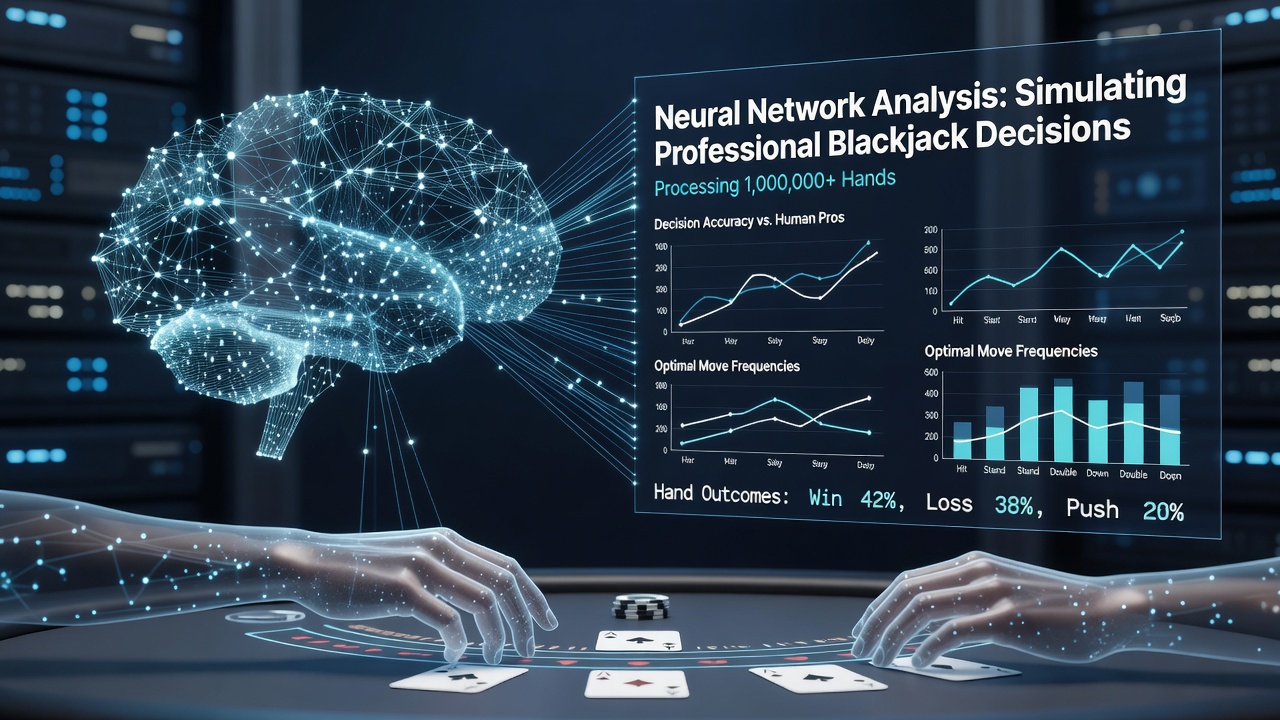
Neural networks examine extensive collections of blackjack hands to identify patterns that align with professional play, drawing on datasets that include millions of simulated and recorded rounds from casino environments worldwide. Researchers collect hand outcomes, player decisions, and dealer upcards from sources such as Nevada Gaming Control Board archives alongside European regulatory filings, then feed these inputs into layered neural architectures that adjust weights based on reward signals tied to long-term expected value.
Training begins with basic strategy tables derived from combinatorial analysis, yet the networks advance beyond static rules by processing sequential decisions across full shoes where card depletion alters probabilities dynamically. Data pipelines normalize variables including running counts, true counts, and player position, allowing models to output hit, stand, double, or split recommendations that mirror actions taken by experienced counters in controlled studies.
Data Acquisition and Preprocessing Pipelines
Casino operators and independent researchers compile hand records at scale through automated logging systems installed on live tables and electronic terminals, capturing every wager, card draw, and outcome timestamped to the millisecond. Preprocessing steps remove noise from incomplete rounds while preserving context such as multiple simultaneous hands or side bets, and organizations like the Australian Institute of Gambling Research have contributed anonymized datasets that expand geographic coverage beyond North American markets.
Feature engineering transforms raw logs into tensors suitable for network ingestion, encoding suit and rank information alongside derived metrics such as remaining deck composition estimates. This preparation enables convolutional and recurrent layers to detect subtle correlations between early-round deviations and later profitability that traditional rule-based systems often overlook.
Model Architectures and Training Dynamics
Deep Q-network variants and policy gradient methods dominate current implementations, with agents learning through self-play against simulated dealers that enforce standard rulesets including dealer hits on soft 17. Reinforcement signals accumulate across episodes that span thousands of hands, rewarding sequences that preserve bankroll while maximizing return-to-player percentages under varying penetration levels.
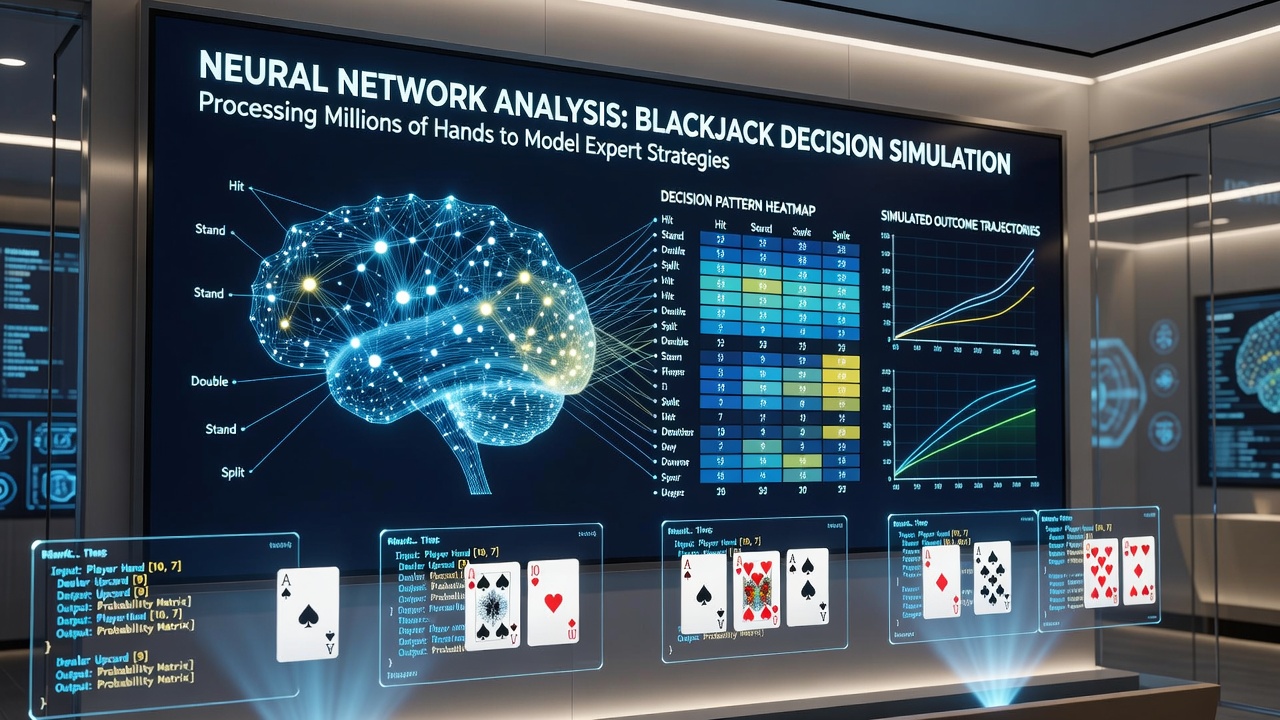
Transfer learning techniques allow models pretrained on general game theory problems to adapt quickly to blackjack-specific constraints, reducing the compute hours required when new rule variations appear in July 2026 regulatory updates across several jurisdictions. Validation sets drawn from withheld hand collections confirm that converged networks reproduce professional decision frequencies within narrow margins on standard deviation metrics reported in peer-reviewed machine learning venues.
Decision Pattern Replication and Edge Maintenance
Professional players typically adjust actions according to true count thresholds that shift optimal play for insurance, surrender, and composition-dependent splits, and neural networks replicate these adjustments by maintaining internal representations of deck state that evolve shoe by shoe. Observers note that trained models generate decision trees that branch differently from basic strategy precisely where count-based deviations produce measurable improvements in expected value, matching patterns documented in field studies conducted by independent analysts.
Real-time inference engines deploy these networks on portable devices or integrated table hardware, delivering recommendations that update with each revealed card without requiring manual count tracking by the user. Accuracy benchmarks published through academic channels show convergence toward expert-level performance after exposure to roughly 50 million hands, with diminishing returns beyond that volume once core patterns stabilize.
Integration With Live Play Environments
Online platforms incorporate neural decision engines into practice modes that let users review historical hands against model outputs, highlighting divergences that cost expected value over repeated trials. Land-based venues have tested similar systems for training dealers and floor staff, using aggregated outputs to demonstrate how small deviations compound across volume play typical of high-limit pits.
Regulatory bodies outside the UK, including Canadian provincial gaming authorities, have begun reviewing neural-assisted tools for compliance with responsible gambling frameworks, focusing on whether automated guidance influences session length or bet sizing behaviors in measurable ways.
Conclusion
Neural networks continue to refine their replication of professional blackjack decisions as dataset sizes grow and architectures incorporate additional contextual signals such as table position dynamics and multi-player interactions. The approach yields consistent alignment with established strategy edges while adapting to rule changes that emerge in evolving regulatory landscapes.