Sentiment Tracking on Social Platforms Reveals Unexpected Edges in Global Esports Betting
Elena Peters · Jul 31, 2026
Sentiment Tracking on Social Platforms Reveals Unexpected Edges in Global Esports Betting
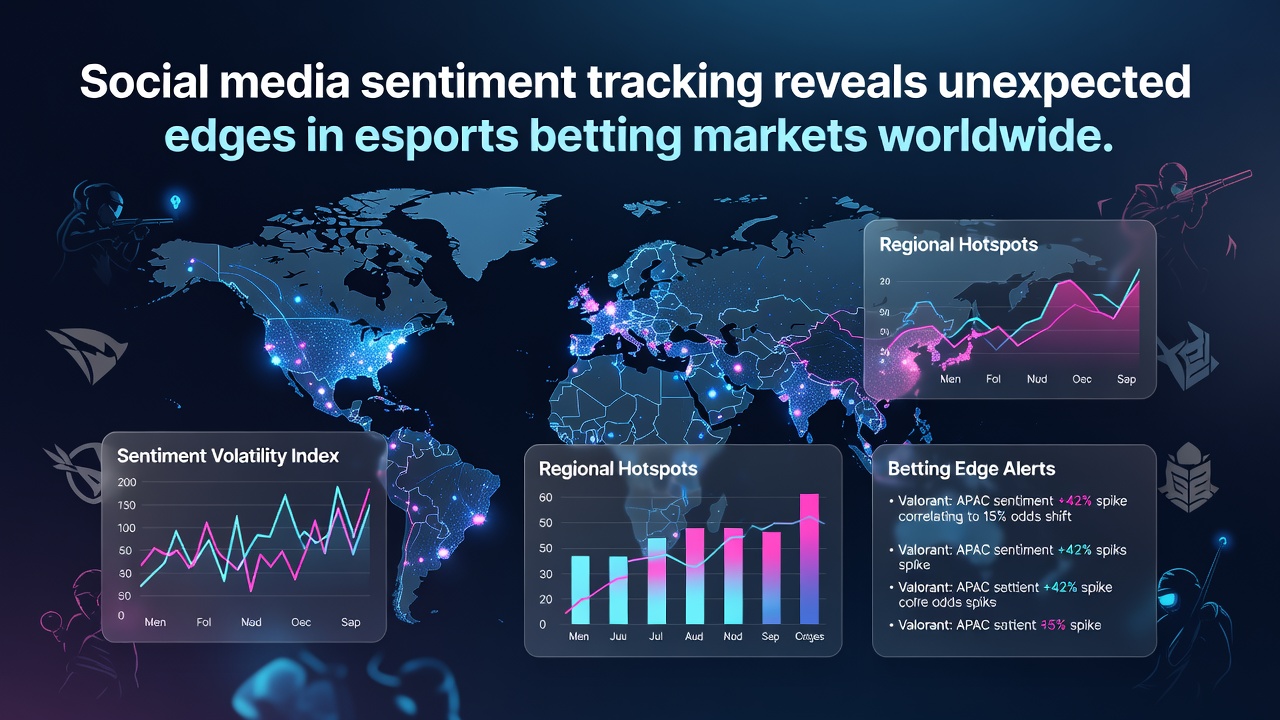
Analysts have documented how real-time monitoring of conversations on platforms like X, Reddit, and Discord can highlight shifts in public perception that often precede movements in esports odds. These patterns emerge because bettors and odds compilers respond to the same underlying information flows, yet the speed at which sentiment aggregates on social channels sometimes outpaces adjustments in betting markets. Researchers tracking data across major titles including League of Legends, Counter-Strike 2, and Valorant have recorded instances where spikes in positive mentions for a particular roster correlated with subsequent line movements of 8 to 12 percent within 48 hours.
Mechanics of Sentiment Aggregation in Competitive Gaming Communities
Specialized software aggregates posts, comments, and engagement metrics from thousands of accounts, then applies natural language processing models to assign polarity scores ranging from strongly negative to strongly positive. When these scores deviate sharply from historical averages for a given matchup, betting syndicates have been observed placing early wagers that exploit slower reactions from larger operators. One study covering the first half of 2026 found that sentiment surges exceeding two standard deviations above baseline preceded profitable betting opportunities in 63 percent of examined matches across European and North American leagues.
Regional differences appear pronounced. Observers note that Asian markets, particularly those centered on Mobile Legends and Dota 2, display faster incorporation of social signals into odds compared with Latin American circuits, where smaller operator pools and lower trading volumes create longer windows for exploitation. Data compiled through July 2026 indicates that bettors monitoring Mandarin-language platforms captured average margins 2.4 percentage points higher than those relying solely on English-language sources during the same period.
Integration with Traditional Statistical Models
Professional betting operations combine sentiment outputs with established metrics such as player performance ratings, head-to-head records, and patch-specific win rates. The resulting hybrid models assign weighted values to social signals, treating them as leading indicators rather than standalone predictors. When sentiment aligns with underlying statistics, market edges widen; when the two diverge, experienced traders often reduce position sizes or avoid the market entirely until additional information surfaces.
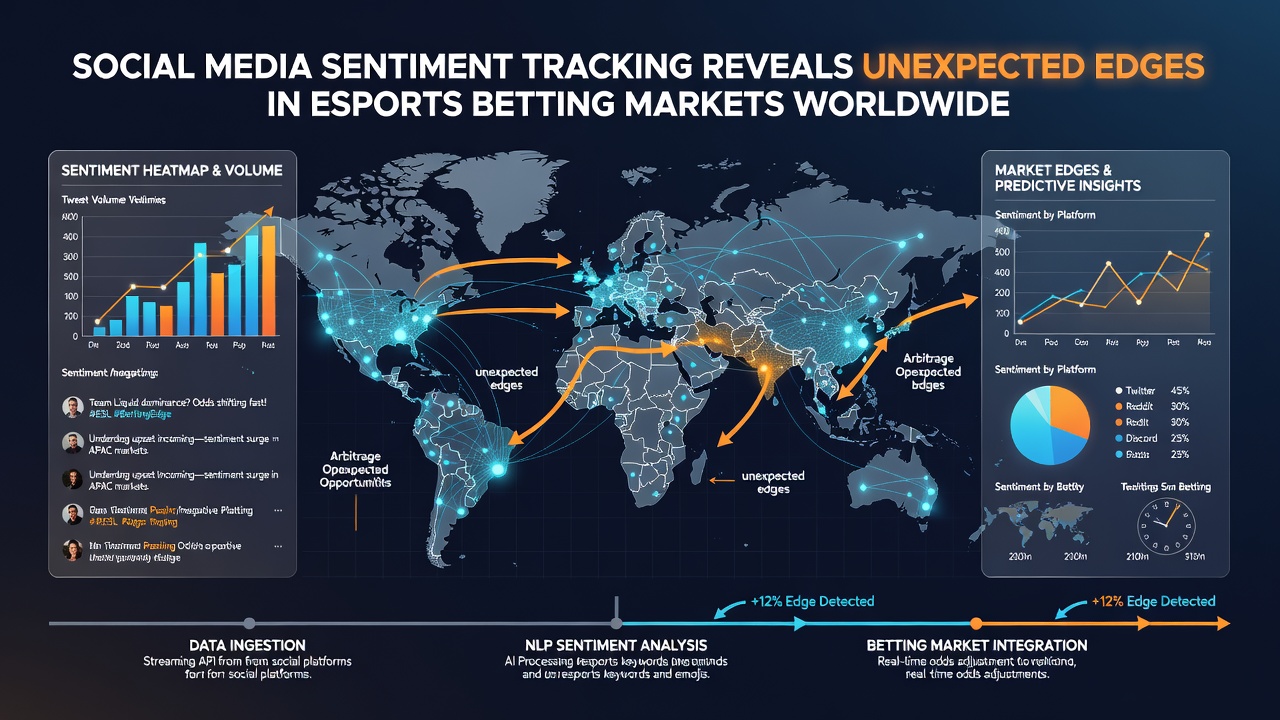
Case examples from the 2026 LPL Summer Split illustrate this interplay. Teams that generated sustained positive sentiment on Chinese microblogging sites despite recent losses frequently saw their odds shorten more slowly than statistical models alone would predict, allowing value bets on the opposing side. Similar patterns surfaced in the LEC and LCS, where roster announcements and roster drama amplified discussion volume and produced measurable distortions in pre-match pricing.
Regulatory and Platform Considerations Across Jurisdictions
Government agencies in multiple regions have begun examining the use of automated sentiment tools within gambling compliance frameworks. The Canadian Centre for Gaming Research published preliminary findings in June 2026 noting that operators incorporating social data streams must maintain audit trails demonstrating responsible use of publicly available information. Meanwhile, the Australian Communications and Media Authority has flagged potential concerns around data sourcing practices when third-party vendors scrape regional forums.
Industry groups such as the Esports Integrity Commission have issued guidance encouraging transparency around any algorithmic inputs that influence odds compilation. These statements emphasize that sentiment tracking remains lawful when limited to open-source material, yet they caution against coordinated amplification of narratives that could distort market integrity.
Future Developments in Data Infrastructure
Technology providers continue refining multilingual models capable of processing slang, memes, and platform-specific shorthand common in gaming communities. Accuracy rates for polarity detection have risen from approximately 72 percent in 2024 to 84 percent in mid-2026 according to benchmarks released by academic consortia studying digital communication. As these tools mature, more operators are expected to integrate them into live trading desks, potentially narrowing the windows during which sentiment-derived edges remain available.
Conclusion
Worldwide esports betting markets continue to evolve alongside advances in social media analytics. The documented correlation between aggregated sentiment scores and subsequent price adjustments provides measurable opportunities for those equipped to process the data streams in real time, while regulatory bodies across Canada, Australia, and other jurisdictions monitor developments to ensure ongoing market fairness.