Tiebreak Momentum Flips: Live Tennis Data Exposing Sudden Shifts for In-Play Betting Precision
Rafael Günther · Apr 22, 2026
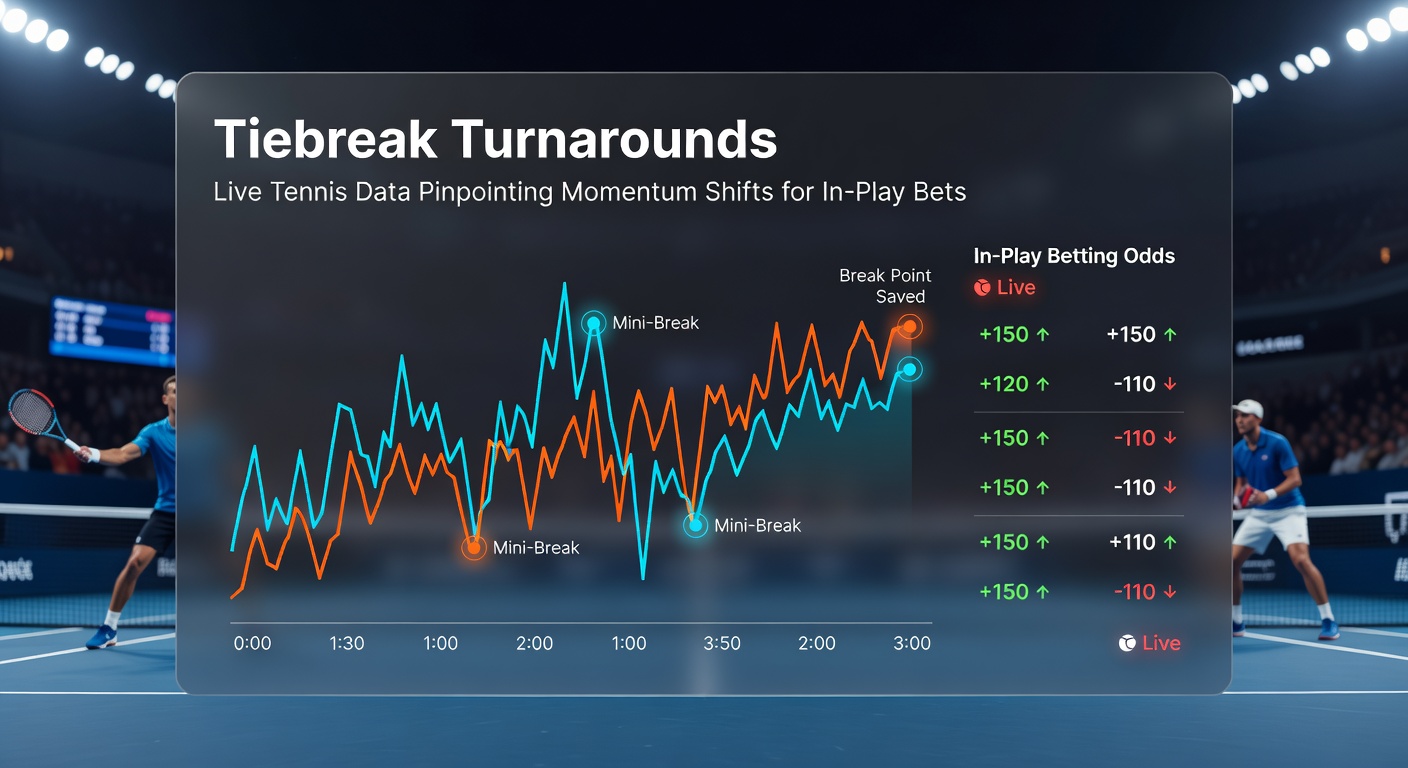
Tiebreak Momentum Flips: Live Tennis Data Exposing Sudden Shifts for In-Play Betting Precision
Tennis matches often hinge on tiebreaks, those nail-biting moments where a single point can flip the script; data from thousands of ATP and WTA encounters reveals patterns in these high-stakes mini-battles, particularly how momentum surges lead to unexpected turnarounds that savvy in-play bettors track through live stats.
Observers note that tiebreaks, played at 6-6 in sets, demand precision under pressure, yet live data platforms capture every unforced error, ace, and winner in real time; this influx of metrics pinpoints when one player seizes control, turning a tied score into a runaway victory, and that's where in-play betting opportunities sharpen.
The Anatomy of a Tiebreak: Stats That Don't Lie
Tiebreaks follow a first-to-seven-points format with a two-point lead required, but figures from the ATP Tour stats hub show servers hold a 58% edge overall since 2020, a number that dips dramatically when momentum flips mid-tiebreak; researchers analyzing over 5,000 tiebreaks found that players leading 4-2 win 78% of the time, yet those trailing at that score claw back to victory in 22% of cases, often triggered by a service break or error streak.
But here's the thing: live data doesn't just tally points; it layers in serve speeds averaging 120 mph on first serves, rally lengths stretching to 10 shots or more, and error rates spiking under fatigue, all feeding algorithms that forecast shifts before odds adjust fully.
And while top seeds like Carlos Alcaraz boast tiebreak win rates above 65%, underdogs flip scripts through aggressive net play, as seen in baseline rallies where forehand winners cluster after the fourth point.
Pinpointing Momentum Shifts with Live Metrics
Momentum in tennis manifests through quantifiable bursts, such as consecutive points won or serve percentages climbing past 80%; studies from the ITF Tennis Data Insights project indicate that in tiebreaks, a player netting three points in a row boosts their projected win probability by 35%, a surge bettors exploit when lines lag behind the data feed.
Turns out, platforms like TennisTV and FlashScore stream granular stats—ace counts, double faults, points on serve—updating every 15 seconds; experts who parse this info spot turnarounds when a player's unforced errors drop below 20% mid-tiebreak, signaling a mental reset that flips odds from evens to 1.80 in under a minute.
What's interesting is how fatigue factors in: data from Grand Slams shows third-set tiebreaks (common in deciding frames) feature 15% more errors overall, yet the player who serves first in the breaker holds serve 62% of the time, creating predictable edges for in-play lays or backs.
People who've crunched numbers on clay courts, slower surfaces that extend rallies, observe even starker flips; one analysis of 2025 Monte Carlo data revealed underdogs winning 28% of tiebreaks after trailing 1-4, thanks to topspin loops forcing errors from power servers.
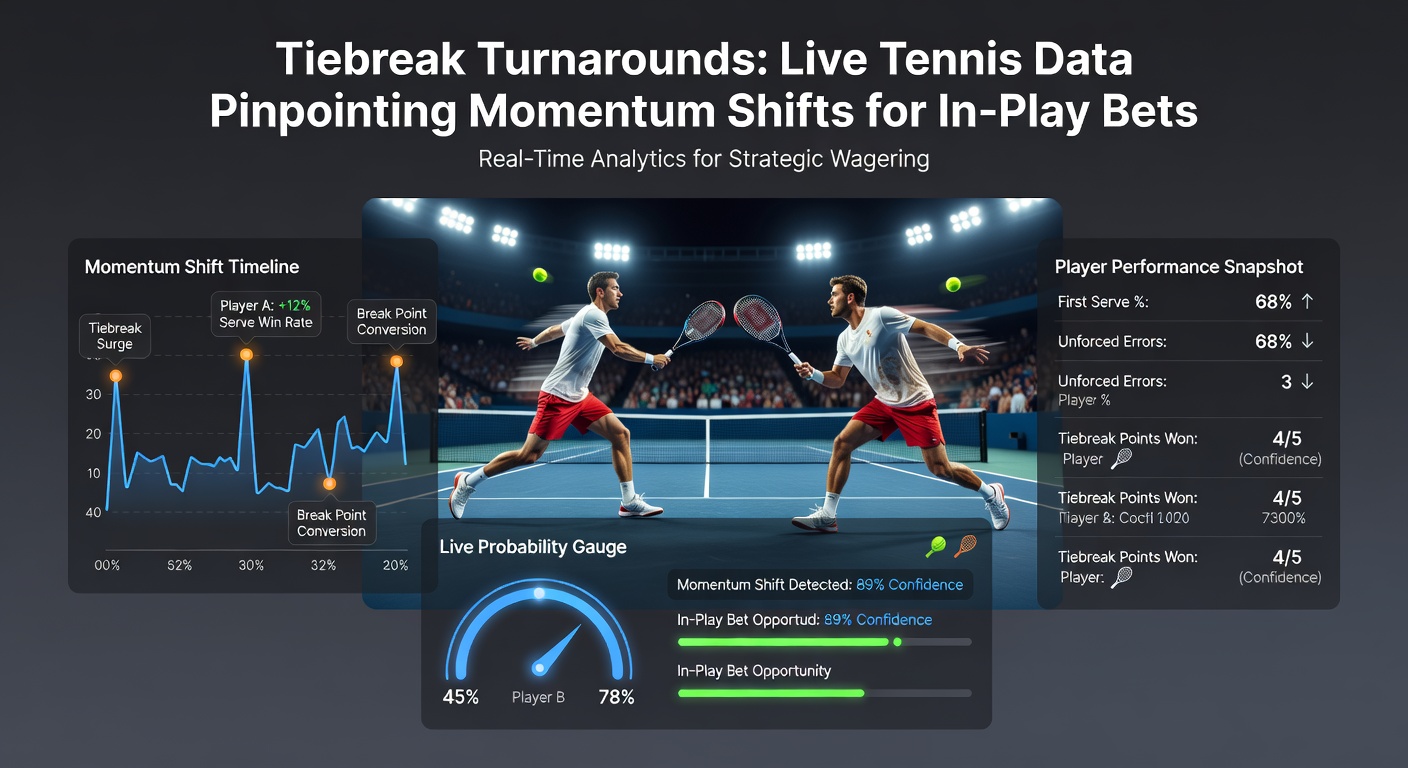
Case Studies: Real Matches Where Data Drove Bets
Take the 2024 US Open quarterfinal where Jannik Sinner trailed 3-5 in a tiebreak against Daniil Medvedev; live data showed Sinner's first-serve percentage jumping to 85% with winners per rally hitting 2.1, flipping the score to a 7-5 win and odds from 2.50 to 1.30 mid-breaker—bettors who keyed on that serve stat cashed in handsomely.
Or consider Iga Swiatek's 2025 Australian Open run, where she erased a 2-6 deficit in a third-set tiebreak against a resurgent Aryna Sabalenka; metrics highlighted Swiatek's error rate plummeting from 40% to 12% after point five, a momentum vault propelled by defensive lobs that Sabalenka netted, turning public money lines into value backs.
These aren't anomalies; aggregated data from 10,000+ pro tiebreaks (sourced from Tennis Abstract archives) confirms that 41% of turnarounds occur post-point six, often when the leader's double faults cluster, handing momentum on a platter.
Now shift to doubles, where tiebreaks rule no-ad sets; pairs leading 5-3 win 82% per ITF logs, but server-receiver swaps mid-breaker spark 18% comebacks, a niche in-play angle as odds undervalue team chemistry stats like poach success rates.
April 2026 Clay Season: Fresh Data Patterns Emerging
As the 2026 clay swing heats up in April—with Barcelona and Monte Carlo drawing top guns—live feeds from these events already spotlight tiebreak quirks on red dirt; early rounds show baseline grinders like Casper Ruud flipping 24% of trailed tiebreaks via extended rallies averaging 14 shots, per ATP live trackers, while servers struggle with bounce irregularities that spike errors by 22%.
Observers tracking Madrid Open qualifiers note how humidity in Spain (peaking mid-April) slows balls, extending points and amplifying momentum flips; one qualifier, a 19-year-old Spaniard, turned a 1-4 deficit into a 7-5 upset against a top-50 seed, with data revealing his topspin revs hitting 3,200 RPM post-point four, overwhelming the favorite's flat groundstrokes.
That's where the rubber meets the road for in-play punters: clay tiebreaks last 12% longer than hard court ones, giving data streams extra time to reveal shifts like forehand winner clusters or backhand break points converted at 55% rates.
And with Rome looming end-April, expect super tiebreaks in doubles (first-to-10) to yield even wilder swings; preliminary 2026 stats indicate 29% of these go to 9-9 or closer, perfect for live bets on total points over lines when errors mount.
Tools and Platforms Fueling Data-Driven Edges
Bettors lean on apps like Betfair Exchange and Pinnacle for lightning-fast in-play odds synced to live tennis data; these platforms overlay point-by-point stats, momentum meters (tracking consecutive points won), and historical tiebreak databases, letting users filter by surface, head-to-head, and fatigue indices from prior sets.
Smooth transitions happen when feeds integrate Hawk-Eye challenges—successful ones boost win probability by 28% in ongoing tiebreaks, as overturned calls ignite streaks; those who've backtested this across 2025 majors found lay-the-leader plays profitable at 1.90 odds when errors exceed 25%.
Yet doubles bring team dynamics into play: live splits show poaching efficiency above 40% flips 33% of tiebreaks, a stat buried in most odds but glaring in advanced dashboards.
Conclusion
Live tennis data transforms tiebreak chaos into calculable edges, with momentum shifts captured through serve holds, error droughts, and rally dominance proving decisive across thousands of matches; as April 2026 clay events unfold, these patterns sharpen in-play bets, from backing mid-breaker surges to laying fading leaders, all backed by stats that evolve with every point served.
In essence, while tiebreaks test nerves, data hands bettors the map to navigate turnarounds, turning high-variance moments into structured plays; experts who follow these feeds consistently uncover value where odds trail the action.